
Top 5 reasons why outsourcing your IT support can be beneficial for your business
by Jon Lober | NOC Technology | February 1, 2023
A list of positive outcomes for your business
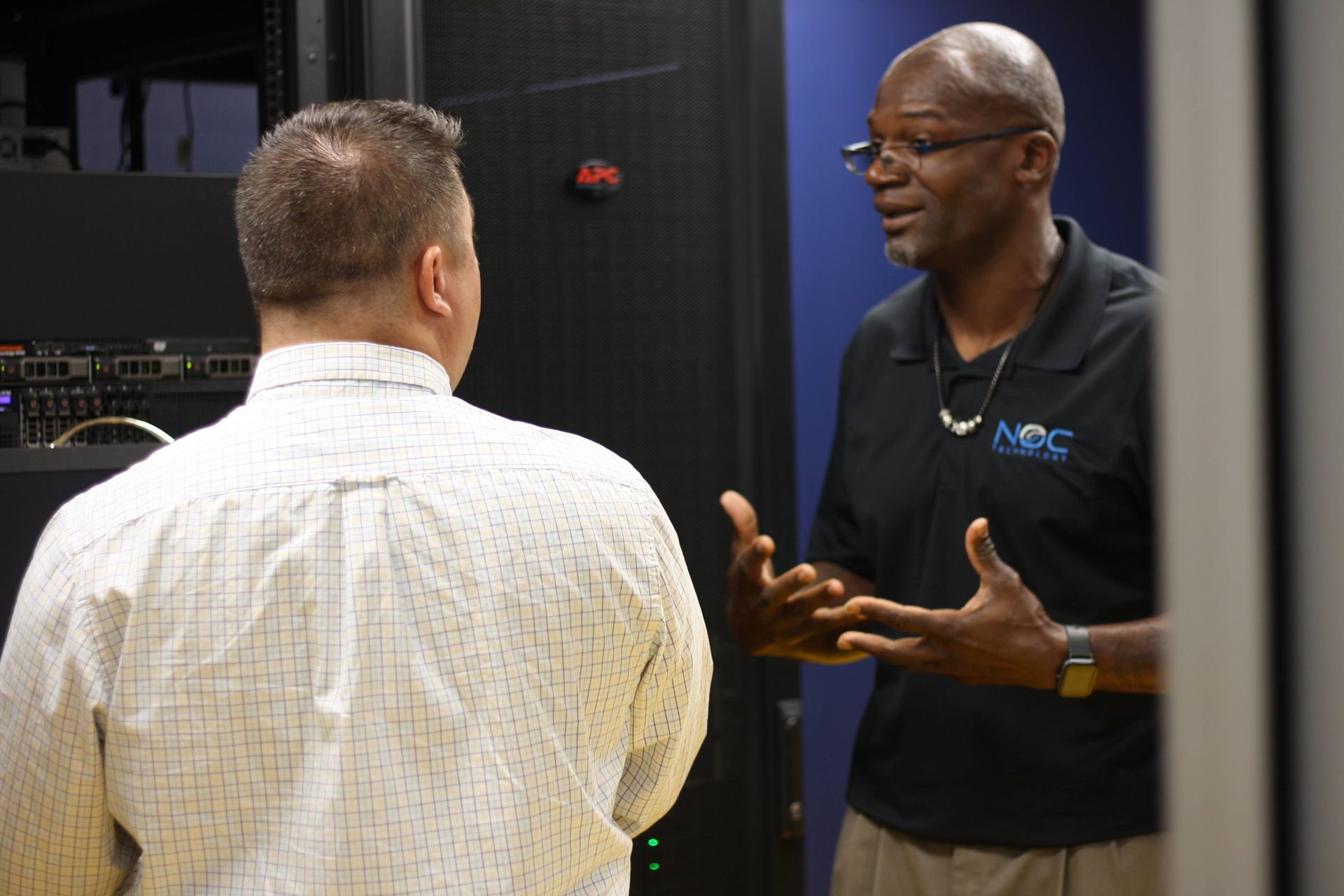
When your internal IT person gives notice or your one-man tech operation gets buried under help desk tickets, you face a familiar crossroads. Hire another employee, promote someone who is already stretched thin, or try something different. For businesses across Greater St. Louis, from small professional firms in Clayton to growing medical practices in St. Charles County, outsourcing IT support has become the strategic choice that transforms technology from a constant headache into a competitive advantage.
This is not about replacing your team or handing over the keys to strangers. It is about getting access to expertise, infrastructure, and round-the-clock coverage that would cost a fortune to build in-house. Here are the five reasons why businesses like yours are making this shift.
1. Cost Savings
The math on hiring IT staff rarely works in favor of small and mid-sized businesses. A competent IT specialist in the St. Louis market commands $65,000 to $90,000 in base salary, but that number only tells part of the story. Add employer taxes, health insurance, retirement contributions, training, and the equipment they need to do their job, and you are looking at a fully loaded cost of $95,000 to $130,000 per year for a single employee.
Now consider what happens when that employee takes vacation, gets sick, or decides to leave. You either scramble to cover their responsibilities yourself or pay a premium for emergency contract help. Businesses in Washington, Chesterfield, and throughout the region have learned this lesson the hard way: one IT person is a single point of failure, not a sustainable strategy.
Outsourcing flips this equation. Instead of paying for one person who cannot possibly know everything, you get a full team for a predictable monthly fee. Most managed IT services run between $150 and $250 per user per month, depending on your complexity and needs. For a 30-person company, that means spending roughly $54,000 to $90,000 annually for an entire team of specialists, 24/7 coverage, and enterprise-grade tools that your one internal hire could never afford on their own budget.
The savings become even more dramatic when you factor in what you avoid: recruiting fees, training costs, the productivity loss during transitions, and the opportunity cost of your leadership team managing IT problems instead of running the business.
See what transparent IT pricing actually looks like →
2. Increased Efficiency
Your business did not hire employees to troubleshoot printer jams, reset passwords, or figure out why Outlook stopped syncing. Yet in organizations without dedicated IT support, that is exactly what happens. Your operations manager becomes the unofficial tech support person. Your accountant spends two hours diagnosing a network issue instead of closing the books. Your best salesperson loses a morning to a laptop that will not connect to the VPN.
This hidden productivity drain is expensive. Studies consistently show that employees in companies without proper IT support lose 20 to 30 minutes per day to technology friction. Multiply that across your team and across a year, and you are looking at the equivalent of losing several full-time employees to tech problems that should have been solved in minutes.
Outsourced IT support changes this dynamic completely. When something breaks, your team submits a ticket and gets back to work. A dedicated help desk handles the resolution while your people focus on what they were actually hired to do. Businesses across the Greater St. Louis area have found that this shift alone pays for the service, simply by recapturing the productivity that was being lost to amateur troubleshooting and workarounds.
The efficiency gains compound over time. Good IT partners do not just fix problems; they prevent them. Proactive monitoring catches issues before they cause downtime. Automated maintenance keeps systems running smoothly. Regular technology reviews identify bottlenecks and opportunities for improvement. The result is an organization where technology enables productivity rather than constantly interrupting it.
3. Access to the Latest Technology
Technology moves fast, and keeping up requires more than reading industry blogs. It requires hands-on experience with the tools, platforms, and security frameworks that protect modern businesses. A single IT generalist, no matter how talented, cannot maintain expertise across cloud platforms, cybersecurity, networking, backup systems, compliance requirements, and the dozens of line-of-business applications your company relies on.
Managed IT providers operate at a different scale. Their engineers work across dozens or hundreds of client environments, encountering problems and solutions that a single-company IT person might see once in a career. When a new ransomware variant starts spreading, a managed provider's security team has likely already seen it at another client and knows how to defend against it. When Microsoft changes something in Azure or M365, they have already navigated the transition with other businesses.
This collective expertise translates directly to your organization. You get access to enterprise-grade security tools, monitoring platforms, and backup systems that would be cost-prohibitive to license and manage on your own. Businesses in Clayton, Chesterfield, and throughout St. Charles County gain the same technology stack that Fortune 500 companies deploy, but at a price point that makes sense for a 25-person firm.
The technology advantage extends beyond tools to knowledge. A good IT partner functions as your technology advisor, helping you make decisions about hardware refreshes, cloud migrations, software investments, and infrastructure changes. Instead of guessing which laptop model to standardize on or whether it is time to move your server to the cloud, you have access to consultants who have helped dozens of similar businesses answer those exact questions.
4. Scalability
Businesses do not grow in straight lines. You land a big contract and suddenly need to onboard fifteen new employees in a month. You open a second location in St. Charles County and need it connected to your main office network by Friday. The holiday rush hits and your temporary staff needs access to your systems without becoming a security liability.
Traditional IT staffing struggles with these fluctuations. Hiring for peak demand means overpaying during slow periods. Hiring for average demand means scrambling during growth spurts. And the recruitment timeline for IT professionals, often three to six months to find, hire, and train the right person, rarely aligns with business reality.
Outsourced IT support is built for scalability. Adding users typically means adjusting your monthly service agreement, not posting job listings and conducting interviews. Spinning up a new location means coordinating with a team that has done it many times before, not asking your one IT person to figure it out while keeping everything else running. Seasonal capacity changes become a line item conversation, not a staffing crisis.
This flexibility matters especially for businesses in growth mode. When you are focused on landing new clients, expanding into new markets, or launching new products, the last thing you need is IT infrastructure becoming a bottleneck. Companies throughout Greater St. Louis have found that outsourced IT gives them the ability to scale their technology capabilities in lockstep with their business growth, without the lag time and risk that comes with building it all internally.
5. Better Security
Cybersecurity is no longer optional, and it is no longer something a general IT person can handle as a side responsibility. The threat landscape has evolved from opportunistic viruses to sophisticated criminal enterprises that specifically target small and mid-sized businesses, precisely because those organizations often lack the security resources of larger companies.
Ransomware attacks cost businesses an average of $1.85 million when you factor in downtime, recovery, and lost business. Phishing campaigns have become so convincing that even tech-savvy employees fall for them. Compliance requirements like HIPAA for healthcare and various data protection regulations add another layer of complexity that requires specialized knowledge to navigate.
A managed IT provider brings dedicated security resources to your defense. This means 24/7 monitoring that catches suspicious activity at 2 AM, not just when someone happens to notice on Monday morning. It means regular vulnerability assessments, patch management that actually happens on schedule, and security awareness training that keeps your team alert to threats. For businesses in regulated industries, it means working with engineers who understand compliance requirements and can document that your systems meet them.
The security advantage goes beyond technology to process and expertise. Good IT partners conduct regular security reviews, test your backups to ensure they actually work, and have incident response plans ready if something does go wrong. They bring experience from protecting many organizations, which means they have seen the attack patterns, know the warning signs, and understand how to respond quickly when threats emerge.
See how our security-first approach works →
Is Outsourcing Right for You?
Outsourcing IT support is not a fit for every organization, but the businesses that benefit most share common characteristics. They have grown past the point where technology problems can be solved by "the person who is good with computers." They recognize that IT has become too complex and too critical for part-time attention. They want their internal teams focused on the work that drives revenue, not troubleshooting technology issues.
If you are a business owner, operations leader, or CFO in the Greater St. Louis area weighing this decision, here are three concrete next steps:
- Audit your current IT costs. Add up salaries, benefits, tools, licensing, and the hidden costs of downtime and productivity loss. Many businesses are surprised to find they are spending more than they realize for less coverage than they need.
- Identify your pain points. Where does technology slow you down? What keeps you up at night? Whether it is security concerns, unreliable systems, or simply not having anyone to call when something breaks, knowing your priorities helps you evaluate potential partners.
- Talk to an IT consultant who will be honest with you. Not every business needs fully outsourced IT. Some need co-managed support that works alongside an internal hire. Others need project help rather than ongoing services. A good technology partner will tell you what actually makes sense for your situation, even if the answer is not what they sell.
Start with a conversation about what your business actually needs →
Frequently Asked Questions
Jon Lober is the CEO of NOC Technology, a managed service provider and business technology consultant based in Washington, Missouri and servicing greater St. Louis and beyond. With over 25 years of business management experience and more than 15 in IT, Jon understands both the complexities of both business operations and the technological infrastructure that makes work possible. Jon is a CMMC Registered Practitioner from CyberAB and is passionate about cybersecurity compliance, business continuity, and intelligent automation, all built to support and protect US-based businesses.